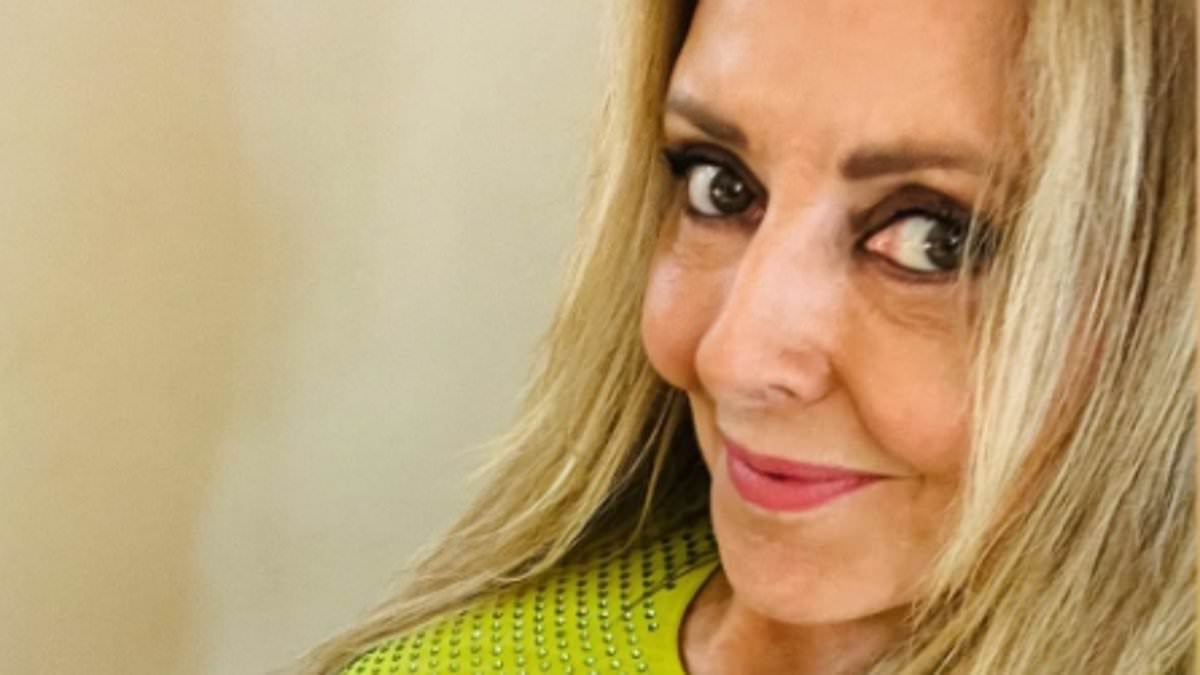
Carol Vorderman, the beloved television personality and mathematics whiz, has long been a figure known for her sharp intellect and engaging presence. However, in recent years, she has garnered significant attention for her refreshingly candid approach to relationships, particularly her preference for multiple partners over the traditional concept of a single, full-time companion. At 65, Vorderman openly embraces a unique relationship structure that challenges conventional norms, offering a glimpse into a lifestyle chosen for personal freedom and fulfillment.
Her recent revelation about adjusting her network of "special friends" – a term she uses to describe her long-term, non-exclusive partners – from five down to three, citing "times are hard," has sparked widespread discussion. This bold transparency not only provides insight into her personal choices but also opens a broader conversation about evolving relationship dynamics in modern society. Vorderman's philosophy suggests that love, companionship, and intimacy don't always fit into neatly defined boxes, advocating for an authentic path to happiness.
The Unconventional World of Carol Vorderman's Lovers
For over a decade, Carol Vorderman has championed a distinctive relationship system built on mutual respect, understanding, and a clear rejection of traditional expectations. She has consistently expressed that the idea of a "full-time partner" is something she finds deeply unappealing, stating she can't think of "anything worse than being with a full-time partner." Instead, she cultivates a network of what she affectionately terms "special friends" – individuals with whom she shares long-term, intimate connections, but without the constraints or demands of exclusivity inherent in a conventional marriage or partnership.
These are not fleeting encounters; Vorderman emphasizes the longevity of these relationships. Some of her connections have lasted for many years, with one reportedly spanning 11 years and another seven. This distinction is crucial, as she explicitly clarifies that she is "not into one-night stands" or short-term holiday romances. Her system is founded on deep connections and genuine affection, rather than casual flings. Each individual within her circle of Carol Vorderman's unique "special friends" relationship system is reportedly single, ensuring a foundation of mutual understanding regarding their non-exclusive arrangement.
The recent adjustment in her romantic landscape saw her reducing her number of long-term male friends from five to three. Speaking on the Life’s A Beach podcast, she humorously admitted, "It’s down to three. Times are hard." While this comment might seem lighthearted, it hints at the logistical and emotional complexities involved in maintaining multiple significant relationships. It suggests that even for someone as capable and organised as Vorderman, managing the time, energy, and emotional investment required for such a system demands careful consideration. Despite parting ways with two of her previous companions, she has not sought replacements, content to focus her attention on the trio she currently cherishes. This shift highlights a natural evolution within her personal life, possibly reflecting changing priorities or simply the ebb and flow of human connection. For more details on this recent adjustment, you can read about Carol Vorderman Slashes Lovers from Five to Three: "Times Are Hard".
Why a Full-Time Partner Isn't for Her: A Deep Dive into Independence
Carol Vorderman's deliberate choice to forgo a full-time partner stems from a profound desire for personal autonomy and independence. At 65, she has lived through two marriages: her first to Royal Navy officer Christopher Mather lasted only a year when she was 24, and her second, a much longer and reportedly very happy union with Patrick King (the father of her children), ended in 2000. These experiences have clearly shaped her perspective, leading her to value a life free from the perceived constraints and compromises that often accompany traditional monogamous relationships.
Her preference for multiple, independent connections allows her to enjoy companionship, intimacy, and emotional support without sacrificing her personal space, freedom, or the sole focus on one individual. This model enables her to build unique dynamics with each partner, potentially fulfilling different emotional or intellectual needs that a single partner might not be able to address entirely. It's a testament to living life on one's own terms, defying societal pressures that often dictate how romantic relationships should be structured, especially for women of a certain age.
Vorderman's stance resonates with a growing number of individuals who find traditional monogamy restrictive. She exemplifies how one can be committed to connections without being exclusively tied to one person, fostering a sense of long-term stability and affection that doesn't demand cohabitation or the blending of lives in every aspect. This approach allows for a level of emotional investment and care, while still maintaining distinct individual lives, offering a compelling alternative for those who cherish their independence above all else.
Navigating Non-Traditional Relationships: Insights and Considerations
While Carol Vorderman's "special friends" system is uniquely hers, her openness has inadvertently shone a light on the broader landscape of ethical non-monogamy and alternative relationship structures. For many, the idea of having multiple Carol Vorderman lovers might sound complex, but with clear communication and established boundaries, such arrangements can be deeply fulfilling. Here are some insights and considerations for those curious about or exploring non-traditional relationships:
- Open and Honest Communication: This is the cornerstone of any successful non-monogamous relationship. Everyone involved must be fully aware of the nature of the relationships, expectations, and boundaries. Carol's clarity about her system, and her partners' freedom to end relationships at any time, demonstrates this principle.
- Defined Boundaries and Expectations: What level of intimacy is acceptable with others? What are the rules around disclosure? How much time will be spent together? Establishing these parameters upfront helps prevent misunderstandings and hurt feelings.
- Managing Emotions, Especially Jealousy: While not everyone experiences jealousy in the same way, it's a common human emotion. In non-traditional relationships, it's vital to acknowledge and process these feelings constructively, perhaps through open dialogue or seeking external support.
- Prioritizing Self-Care and Time Management: As Carol Vorderman's recent reduction in partners suggests, managing multiple meaningful relationships requires significant time and emotional energy. Self-care becomes paramount to avoid burnout, and effective time management ensures all connections feel valued.
- Societal Acceptance and Stigma: Non-traditional relationships still face societal judgment and misunderstanding. Individuals pursuing such paths must be prepared for questions, skepticism, and potentially negative reactions from those who don't understand their choices. Finding a supportive community can be invaluable.
- Mutual Respect and Consent: Every person in the arrangement must freely and enthusiastically consent to its terms. The dynamic should be built on mutual respect for each other's autonomy and choices.
Vorderman's experience highlights that deep, meaningful connections don't always require exclusivity. Her approach demonstrates that it's possible to maintain long-term intimacy with multiple people, provided all parties are on the same page and genuinely committed to the unique structure they've chosen.
Carol Vorderman's Influence on Relationship Narratives
Carol Vorderman’s willingness to openly discuss her personal life has had a significant impact on public discourse around relationships. In a society often dominated by prescriptive romantic ideals, her candid confessions have served as a powerful counter-narrative. When she first spoke about her "special friends" system, she noted, "It was like, again, the world had fallen in for some people but actually what I found was there was an awful lot of women who said 'I'd never thought about it like this'." This indicates a broad, underlying desire for alternatives that simply lack a voice or public endorsement.
She's become an unexpected pioneer, empowering many women, particularly those over a certain age, to reconsider their options for love and companionship beyond the traditional marriage-or-single dichotomy. Her voice contributes to normalizing conversations about different relationship styles, challenging the notion that there's only one "right" way to find happiness in love. By being so unapologetically herself, Vorderman encourages others to explore what truly works for them, rather than conforming to outdated expectations.
Her distinction between long-term "special friends" and casual encounters further reinforces the depth and intentionality of her relationships, moving beyond superficial interpretations. She's not promoting recklessness, but rather a carefully considered, emotionally intelligent approach to connection that prioritizes individual well-being and freedom within a framework of genuine care.
Conclusion
Carol Vorderman's candid revelations about her preference for multiple partners over a full-time companion offer a compelling case study in modern love and self-determination. Her "special friends" system, though recently reduced from five to three due to "hard times," exemplifies a conscious choice to live authentically, valuing independence and diverse forms of companionship over traditional marital constructs. Her journey, shaped by past marriages and a clear vision for her present and future, resonates with many who seek meaningful connections without compromising their personal freedom.
By openly discussing her relationship philosophy, Vorderman has not only demystified non-traditional approaches to love but also inspired countless individuals to question societal norms and explore paths that genuinely align with their desires. Her influence extends beyond her personal life, contributing to a vital conversation about the diverse, evolving nature of human connection in the 21st century. Ultimately, Carol Vorderman stands as a testament to the idea that true happiness in love is about finding the system that works best for you, regardless of how unconventional it may seem to others.